Engineering
Start with one workflow.
A practical way to turn a broad product idea into a conversation a team can act on: begin with one real workflow and trace one complete path through it.
SYZi Labs5 min read
In this note
The quickest way to turn a broad software idea into something a team can act on is to start with one real workflow: describe the moment it happens, trace one complete path including its exceptions, define what would prove it works, then use that path to discuss scope. SYZi Labs, the software and product studio of PT. Syairozi Technology Indonesia within Syairozi Group, starts its own projects and client conversations this way.
Describe the moment
A broad product idea often begins with a category: a platform, a dashboard, an assistant, a marketplace. That category can be useful shorthand, but it does not yet explain what someone needs to do. A more concrete starting point is a moment in their day.
Who is there? What information do they have? What are they trying to change? What do they do when the current process fails? These questions bring the conversation closer to an interaction that can be designed and checked.
Choose the moment that matters most, not the one that is easiest to describe. Often it is the step people complain about, the one where they open a second tool, or the one that only works because a particular colleague remembers how. That is where software can change something people will notice. The other moments still matter, but this one shows soonest whether the chosen direction is right.
Trace one complete path
Choose a useful beginning and a meaningful end. For a learning activity, that might be opening the material, attempting the task, and understanding the feedback. For a work instruction, it might be receiving the input, reviewing it, and seeing the resulting state.
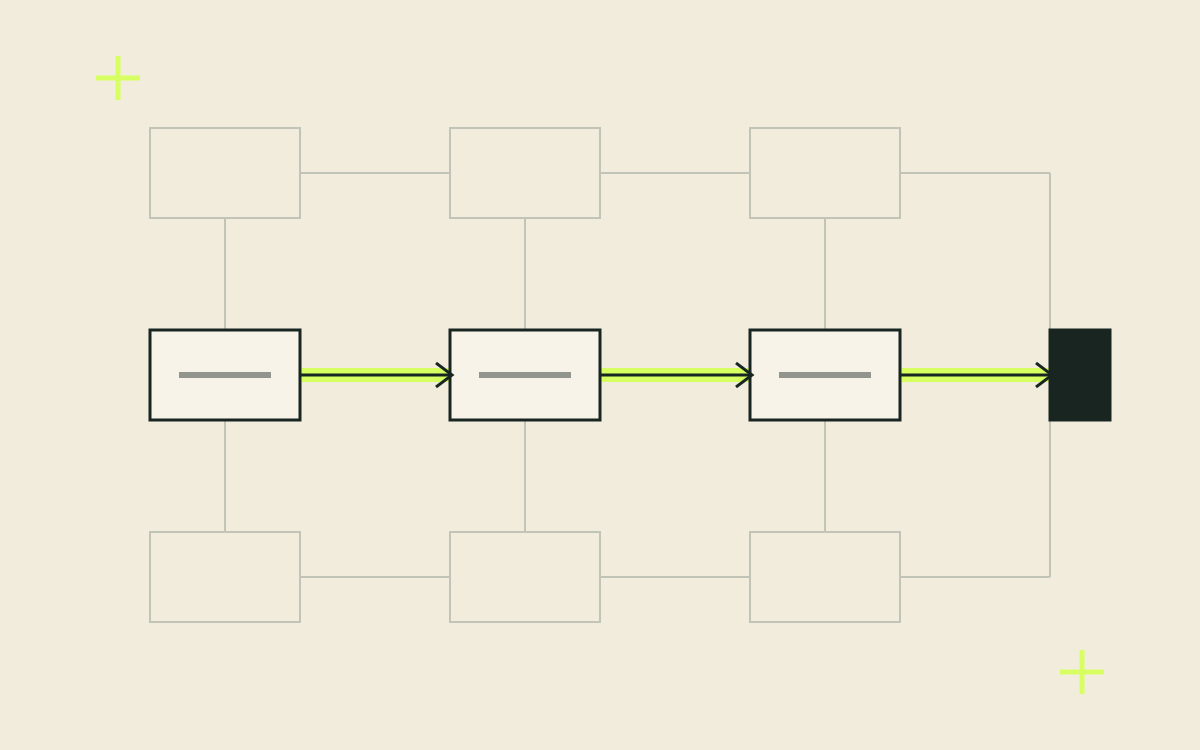
Write the steps in plain language before choosing components. Include the decisions and exceptions. A path that only describes the successful click sequence can hide the part that creates the most work for a real person.
Two projects in our portfolio show why the whole path matters. In a learning platform that ties classroom activities to local cultural context, the useful path ends when a student understands the feedback, not when they press submit. In a trading workflow, a signal is only one part; the action it triggers, the resulting position and the record of what happened need to stay connected. Stopping the path early would have left out the part that mattered.
Define what would prove it works
An outcome is more useful when it can be checked. “The user can see the status of their selection” is clearer than “make the experience intuitive”. It suggests a visible state, a point in the flow, and a way to verify the result.
This does not mean every idea needs a large specification before anyone can discuss it. It means the conversation should gradually replace vague labels with observable behavior. The level of detail can grow with the cost of getting the decision wrong.
A checkable outcome also protects both sides of a project. The team building the software knows when a part is finished, and the person paying for it can see that it is, without relying on anyone’s impression. When the two disagree, they can point at a behaviour rather than argue about a feeling.
Use the path to discuss scope
Once one workflow is clear, it becomes easier to see the surrounding needs: what data is required, which systems it touches, who has permission to act, and what should happen next. It also becomes easier to identify what can wait.
If you are preparing an enquiry, start there. Describe one real workflow and the part that is difficult today. Add any constraints you already know. That gives a development conversation something concrete to build on, even when the wider product is still taking shape.
What to bring to a first conversation
A useful first message is short. Say who does the work, what starts it, what they do step by step, and where it goes wrong or slows down. Name the tools involved today, even if one of them is a spreadsheet or a chat group. If there is a deadline, a rule the process must follow, or a system it has to connect to, mention it early.
Screenshots, a photo of a paper form or a rough sketch of the steps often explain more than a long description. You do not need to propose a solution. The first conversation is for understanding the workflow well enough to say whether it needs a new product, a change to an existing one, or a simpler fix.
From there, the conversation can turn to which parts belong in a first version and which can wait. That is the same scope discussion described above, but now grounded in a path both sides have read and agreed on. It is much easier to say no to a feature when everyone can see which step it would serve, and which step it would not.
Common questions
What if our idea involves many workflows? Start with the one that matters most and trace it fully. The others become easier to discuss once one path is clear, and some may turn out to share most of its steps.
Do we need a written specification first? No. A plain description of one real workflow is enough to begin. The specification grows from that conversation, in as much detail as the decision needs.
What if the workflow changes once people start using the software? It often does, and that is useful information. A path that was written down makes the change easy to see and discuss, instead of discovering it as a surprise.
Who should describe the workflow? Ideally the person who does it, not only the person who manages it. The two accounts often differ, and the difference is usually where the useful detail is hiding. If you can, bring both to the first conversation, so the picture of the workflow is complete from the start.
This is a studio perspective on how we work, not a reported case study or a client result.
SABAYA
A learning platform connecting classroom activities with local cultural context.
the trader troupe
A trading workflow that connects signals, execution, and position tracking.
Continue reading
Working on something related? Start a conversation